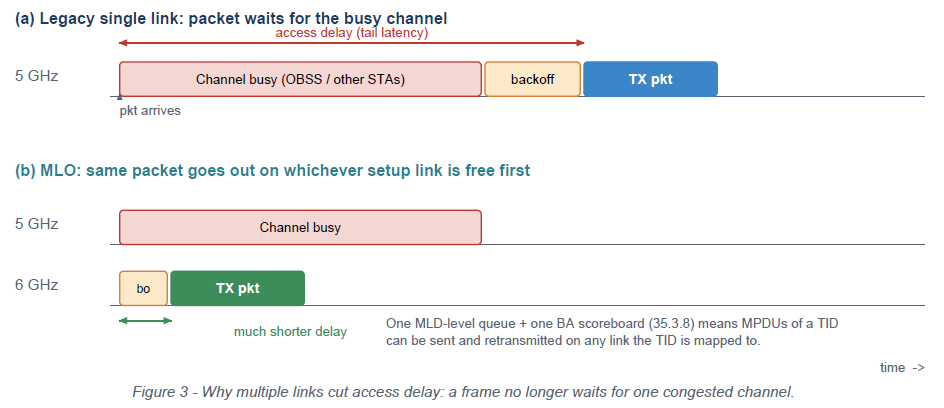
Before MLO, The client station could connect a specific BSSID on one RF band to the AP. The AP might be supporting other BSSIDs on its other bands. The client if it would need to move to the other BSSIDs would have had to break its link on one band and re-connect on the other. Also, The station other RF bands remain idle. In case, the station wishes to transmit a packet but the medium is busy on the connected RF band, the station has to wait and this would delay transmissions. To address this, the standard brought in MLO to improve throughput by better utilizing the idle links.
The below table outlines how a legacy client faces certain issues and how MLO was designed to overcome it.
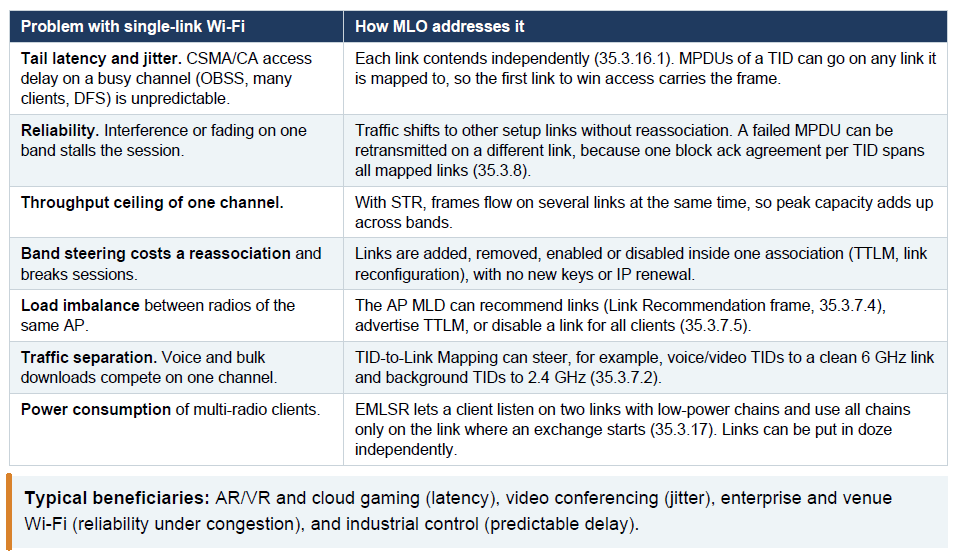
As can be seen, MLO brings in advantages in utilizing the idle links better. Data can be sent on multiple bands simultaneously significantly improving the utilization of different channel links between the AP and client station.
The below Line diagram provides the reader with a line chart showing the initial MLO connection establishment.
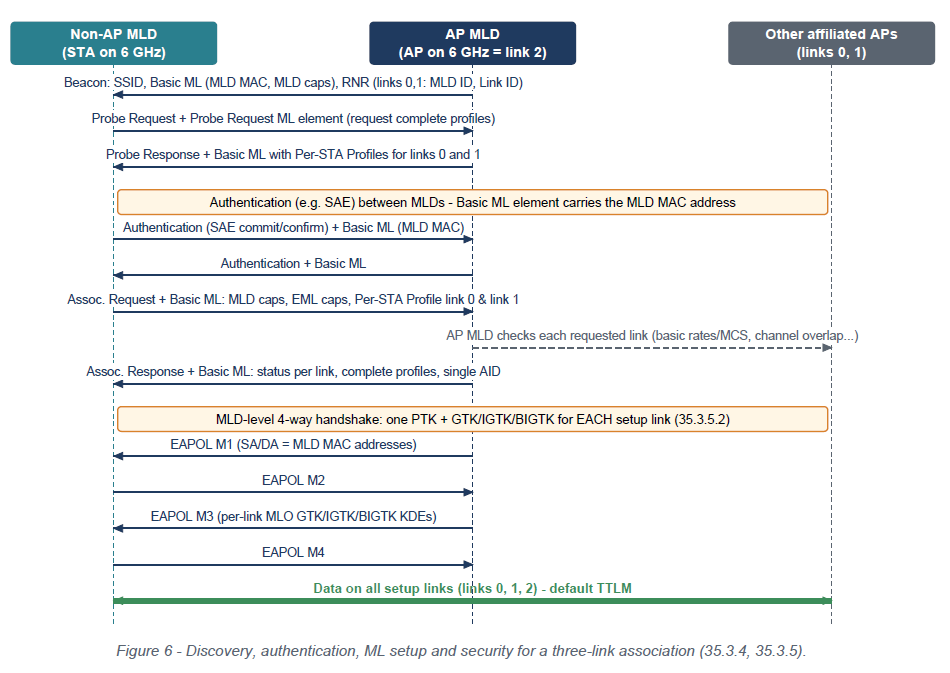
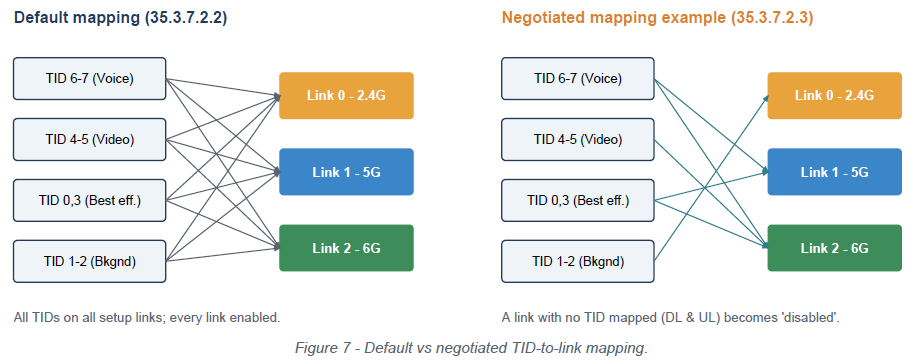
TTLM mentioned in the image stands for TID-To-Link-Mapping. The different Traffic Identifiers (TIDs) can be mapped to be transmitted on different bands or an all bands based on the availability of the band as shown below:
Pingback: MLO Architecture – Information Elements | Hitch Hiker's Guide to Learning